Tuesday, May 30, 2006

Geopolitics And Garish Gimmicks

The month-long aftermath of King Gyanendra’s capitulation to mass protests and reinstatement of the House of Representatives has spawned a vast array of speculation over the circumstances leading up to the event.
The Seven Party Alliance (SPA) continues to insist that it drove the popular surge for democracy with the moral support from much of the world. The Maoists, rebuffing the SPA’s claim to exclusivity, maintain they had a preponderant role in the demonstrations. Even in their battered state, members of the royal government appear to stand by their contention that the “democracy movement” was neither: The Maoists, using the SPA cover, were close to capturing Kathmandu and establishing their much-cherished totalitarian communist state. Part of this contention was asserted by U.S. Ambassador James F. Moriarty in an interview with CNN during the height of the street protests.
Another version has it that King Gyanendra relented after Nepali Congress President Girija Prasad Koirala – the supreme commander of the movement and current prime minister – and Unified Marxist Leninist general secretary Madhav Kumar Nepal personally assured the monarch of their ability to retain a ceremonial monarchy as well as rope in the Maoists in a broad national framework.
Could the drama of the UML leader being returned to the Armed Police Force’s barracks in Kakani halfway through his transfer to the Supreme Court in Kathmandu have been merely a smokescreen for his and Koirala’s meeting with King Gyanendra?
A little noticed report on the People’s News website suggests that the reinstatement of the legislature was intended to forestall a greater spiral of death and destruction. Under the headline “India prepared to invade Nepal in April,” senior journalist Bhola B. Rana writes that India had kept five fighter helicopters on high alert at a military camp in Dehra Dun along with a special military contingent.
Quoting a delayed report from Janamanch, a Nepali weekly, Rana adds that the Indian Embassy had informed the then government an Indian Airlines aircraft was on standby to evacuate the personnel of the embassy.
What seemed to have precipitated the pace and content of the subsequent turn of events was China’s deployment of hundreds of thousands of soldiers along five points of the border. Moreover, according to the report, China put its Air Force in high alert in air bases in Tibet and Chinese satellites and radar were monitoring Nepalese airspace. In effect, the royal proclamation on April 24 owed its genesis to geopolitical pressures.
Considering the poor sourcing of the report and the delay in its dissemination, it would be tempting to dismiss it as a red herring. However, any student of contemporary Sino-Indian relations can easily view the report against the background of the cooperation and competition that has defined the Asian giants’ assertion of their regional and global roles. Moreover, it was King Gyanendra’s sustained moves toward reinforcing Nepal’s ties with China as a way of pulling the kingdom out of India’s menacing embrace that led New Delhi to forge the SPA-Maoist alliance against the palace.
The utter travesty the SPA has foisted on the country in the name of taming the palace, empowering parliament, democratizing the military and secularizing the state becomes all the more tragic.

Saturday, May 27, 2006

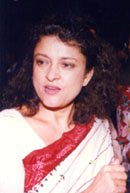
Anyone Seen Her Lately?

Perhaps the most controversial woman during Nepal’s 1990-2002 brush with democracy, she went on to become one of the fiercest critics of King Gyanendra’s direct rule. Her daring escape from Kathmandu after the Feb. 1, 2005 royal takeover made headlines across India.
In Sujata Koirala’s retroanalysis, narrated to one Indian reporter, King Gyanendra certainly had something to do with the Narayanhity bloodbath not because of his family’s fortuitous survival or because the crown fell on his head a second time. It was because Nepal, under his watch, had accelerated toward an autocracy always associated with his personality and predilections.
Sujata was among the first Nepali Congress leaders to advocate an alliance with the Maoist rebels. Weeks later, she traveled to Washington D.C. to rally for democracy in front of the White House. Remember that was a time most Nepalese still blamed her, more than anyone else, including King Gyanendra, for distorting democracy.
Nepalese society wasn’t prepared for such a strong mix of stubbornness, self-assurance and a scent of sleaze in a woman. The fact that she was modern enough to marry a German didn’t matter. Actually, that reality was held against her. (If marriage and life abroad were ever a bar to democratic ebullience in neighboring Burma, Aung San Suu Kyi would probably still have been in Britain.)
Sensing the royal regime’s vulnerability once her father, Girija Prasad Koirala, arrived in New Delhi for his first series of “medical treatment” in mid 2005, Sujata returned home with him to galvanize the pro-democracy protests. (At one point, she was rumored to be paying between Rs.300 and Rs.500 per person per protest day.)
Soon the Nepali Congress dropped its five-decade fealty to constitutional monarchy.
Sujata, however, stunned a Kathmandu audience by asserting that her party would be ready to accept a ceremonial monarchy if King Gyanendra acknowledged his errors. Moreover, she almost extracted a similar pledge from the other SPA speakers on the podium.
With the reinstatement of the House of Representative – an unwavering demand of Girija Prasad Koirala since the day it was dissolved in 2002 – there was little doubt that the NC octogenarian would return as premier. This time, Sujata is conspicuous by her absence.
There could be several explanations. With Maoist supremo Prachanda scripting each act in Kathmandu, there is perhaps little for the prime minister to do, much less for the Koirala coterie.
Or, having finally secured a formal place in the Nepali Congress, Sujata herself must have found it prudent to focus on party organization. (Her last effort was sabotage by someone within the family who whispered into the returning officer’s ears that Sujata had not spent the mandatory five years in the country to be eligible for any Nepali Congress office.)
Maybe the crass politician she is sometimes castigated for has come to surface. Obscurity, no doubt, would shield her from needless controversy. But the corollary must have been more convincing: prominence would pummel those expected to perform in full public view.
Whatever her motives, politics does seem a little different without Sujata Koirala. Unless, of course, that’s the whole point of the historic House of Representative Proclamation.

Wednesday, May 24, 2006

Has The Backlash Begun?

Thousands of Nepalese have protested in Birgunj against the House of Representatives’ proclamation turning Nepal into a secular state. More than 5,000 people burned tires and logs, and blocked roads in the southern commercial hub, about 150 km south of Kathmandu.
Shouting “Jay Shree Ram!” demonstrators forced shops to pull down shutters and forced vehicles off the streets. They are demanding that Nepal be declared a Hindu nation.
The secularization of Nepal was part of a series of changes designed to clip King Gyanendra's powers drastically and reduce his links with the army. That was probably why the collapse of the world’s only Hindu kingdom prompted barely a flutter in a nation where 80 percent of the 26 million inhabitants are Hindus. The measure was hailed by ethnic indigenous communities as well as Christian and Muslim organizations.
Nepalese Hindu groups, widely perceived as supporters of active monarchy, could not have found the political atmosphere very congenial to mount a vigorous opposition. It fell upon India’s Hindu nationalist Bharatiya Janata Party (BJP) to highlight that hitherto obscure distinction between the Hindu character of the preponderant part of the Nepalese state and its monarchy. The BJP, which hesitated to come out in full support of the royal takeover, blazed the trail. A world that has a multiplicity of Islamic republics could certainly have made room for its first Hindu nation regardless of whether Nepal remained a monarchy or became a republic.
Birgunj has some symbolism in the Hindu-versus-secular Nepal debate. Last month, when the anti-king protests were at their height, the World Hindu Federation (WHF) had celebrated its silver jubilee by holding a lavish program in the city, which was attended by King Gyanendra.
WHF chief Bharat Keshar Simha, a strong supporter of the royal takeover, had urged Hindus all over the world to support the monarch. On Wednesday, Simha said his organization would continue to fight against the parliament’s decision, calling it “illegal” and a “conspiracy against the country”. A decision taken by a handful of people, Simha continued, was not acceptable to all Nepalese.
More portentous was his next assertion. “If political parties are convinced that the state should be declared secular, they should have courage to go for a referendum and get people’s mandate rather than making a proclamation in an illegal way.”
Juxtapose Simha’s challenge with the commiseration of Chintamani Yogi, principal of Hindu Vidyapeeth, who believes the harmonious co-existence of several religions in Nepal could be endangered.
Injecting some color into his contention, Yogi added: “Muslim brothers sell bangles to Hindu sisters in front of Krishna temple in Lalitpur. Such harmony might be destroyed if we try to politicize religious matters.”
Has the backlash begun?

Saturday, May 20, 2006

The Furious One Gets Angrier

Nope, these aren’t easy times for the Maoists. Rebel supremo Prachanda announces that he would lead the insurgents to a summit with the new representatives of the old state on building a new Nepal. It takes Prime Minister Girija Prasad Koirala several days to respond, and then he ends up naming Home Minister Krishna Prasad Sitaula to head the government team.
Sitaula isn’t the problem here; he was the Nepali Congress representative most closely involved with the Seven-Party Alliance (SPA)’s 12-point accord with the Maoists. It’s his rank. King Gyanendra had shown greater deference to the Maoists in 2003 by deputing Deputy Prime Minister Badri Prasad Mandal to the negotiating table once it became clear that Maoist No. 2 Dr. Baburam Bhattarai would represent the rebels.
Although the Maoists have gained much from King Gyanendra’s capitulation, they have solid reasons to feel bruised. Even in victory, the Seven-Party Alliance (SPA) continues be tight-fisted, insisting that People’s Movement II was primarily an enterprise of the mainstream. The evidence clearly exonerates the disgraced and detained ex-home minister, Kamal Thapa, who unleashed the full force of the state against the street protests contending that the Maoist had infiltrated them as part of a revised strategic offensive.
Specifically, King Gyanendra’s reinstatement of the House of Representatives last month was hardly the triumph the Maoists wanted. They had, after all, raised arms against constitutional monarchy AND parliamentary democracy.
After denouncing the SPA’s “sellout” to the palace, primarily to placate the rebel base, Prachanda acquiesced in the roadmap. The legislature was expected to assemble only for a short session and that, too, to invite the Maoists to join the interim government that would hold elections to the constituent assembly. Instead, the legislature seems to be acquiring supernatural powers of its own with each sitting.
With the Nepali Congress heading the executive and the UML at the top of the legislature, it’s all in the SPA family. Prachanda makes Matrika Prasad Yadav – whom the SPA government recently freed from prison as a goodwill gesture -- to assert the Maoists’ right to lead the interim government. UML general secretary Madhav Kumar Nepal, in effect, dismisses such talk as premature.
Now Prachanda has internationalized the issue. In an interview with The New York Times in an Indian city – which correspondent Somini Sengupta refused to identify on Prachanda’s insistence -- the rebel leader has let off his pent-up fury.
While The Times led with Prachanda’s refusal to disarm his fighters before the CA elections, unless the Nepal Army does, the rebel leader resonates the most in his frustration with SPA leaders.
“Now they want to marginalize us, they want to bypass us, and they want to
minimize the role of the Maoist movement,” Prachanda says. “That's why we are seriously concerned.”
Prachanda delineated what he described were his bottom-line demands for a new Nepal: a
federal structure that offers greater rights to Nepal's ethnic minorities, a new constitution that scraps the monarchy, and “revolutionary land reform” along the lines of Mao Zedong’s principle of “land to the tiller.”
Adding some background and context, Sengupta reminds readers that the rebels have said they would accept the verdict of Nepalese voters on whether the nation should remain a constitutional monarchy. Prachanda probably won’t shoot off a note to the NYT foreign desk clarifying that position.
Ever since emerging a step closer into full public view, Prachanda has been extremely elastic on the monarchy. Invariably, he demands that King Gyanendra be ousted, tried and executed, only to express a readiness to accept the popular will – often in the same breath. The thing to measure in the days and weeks ahead, therefore, will be Prachanda’s malleability in his references to the monarchy.

Friday, May 19, 2006

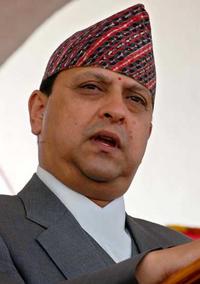
King Gyanendra The Commoner

With the Nepalese Army now firmly under the command and control of the Government of Nepal, King Gyanendra can safely put away his uniform and pursue his pre-enthronement business, environmental and literary interests.
The last thing palace advisers should be thinking about is challenging in the Supreme Court the People’s Proclamation unanimously approved by the reinstated House of Representatives.
Constitutionality stands no chance against politics during these fluid times. Moreover, the next couple of weeks are going to be busy. As Maoist Chairman Prachanda prepares for his summit with Prime Minister Girija Prasad Koirala, the royal family, under the new legislative provisions, can expect to have their day in court.
Litigation is likely on everything from the accumulation of noses and earlobes during the War of National Unification of the 1700s to the abuse of countless quintets of buffaloes, sheep, goats, ducks and chickens slaughtered by the monarch in the name of Hinduism’s sweet lords and lordesses.
This embarrassing emasculation of the monarchy should not obscure the bright side of things. Since the royals’ property will now be taxed, King Gyanendra might want to consider that 30 percent voluntary disclosure scheme introduced by Ram Sharan Mahat during his last stint as finance minister and settle property matters once and for all.
The next thing the monarch should do is request the House of Representatives is to begin working out a schedule for his coronation. Since MPs will have to begin by voting on the fee structure for the panel of astrologers tasked with determining the most propitious planetary alignments, advance planning is highly desirable. That would leave sufficient time for the legislators to determine who should get the contract to clean up Hanuman Dhoka’s Nasal Chowk. This might seem tantamount to jumping the gun, especially with the constituent assembly expected to determine the fate of the monarchy still up in the air. Consider the other side of the argument. Depending on who’s doing the calculation, the monarchy will be around for another year to 18 months. Four years on the throne, all but four months as an active monarch, has brought King Gyanendra much denigration and denunciation. If he is to be castigated as the symbol of the institution that emaciated Nepal, the least he deserves is a formal coronation. At a minimum, the pomp and circumstance must befit a ceremonial king.
Crown Prince Paras should quit worrying about his public persona. If the constituent assembly decides to stick with the monarchy, parliament will decide what role Prince Paras should assume when the time comes. There will be plenty of political convulsions to contend with before the next cataclysm strikes, according to trend analysis, in 2018
The secularization of the Nepalese state might not be a bad thing, either. The whole idea of a Hindu kingdom cozying up with godless Chicoms and rabidly religious Pakislamists was incongruent. A Hindu ceremonial monarch of a secular state would be free to expand all kinds of ties with all kinds of royals beyond the seven seas. Prince Hridayendra won’t have to worry about his right to the throne every time a non-Hindu happens to catch his fancy.
The greatest possibility the People’s Proclamation opens up for King Gyanendra the Commoner lies in promoting the agenda he failed to advance as executive monarch. Ironically, the most antiquated institution of Nepalese society became the most vigorous advocate of World Trade Organization-led globalization. There is still time to build a lasting legacy.
Soaltee Group can start competing with the Chaudharis, Khetans, Vaidyas and Jyotis in patronizing parties and politicians most favorably inclined to free-market economics. Better still, the royals can build their own party that could pursue the twin goals of environmentally sustainable tourism and developing Nepal as a transit hub between the India and China that would offset the boisterousness and bitterness of its political arena.
India is still dominated by ex-royals and the Chinese are no doubt annoyed by perceptions that they are sponsoring the Nepalese Maoists rebels. There must be some temptation in Beijing to get even by instigating a secessionist movement in the Terai.
With Hindu nationalists fortifying the flank in India, China won’t face the embarrassment of supporting an executive monarch shunned by the rest of the whole world. Promoting fraternal ties with a palace-built party could be a safe bet both strategically and commercially for Beijing.
With the Nepali Congress, UML and the Maoists expected to be tied up in governance, King Gyanendra might even feel comfortable mingling with the Darbar Marg crowd without the encumbrance of royal guards far sooner than anyone of us expected.